
Network society refers to the society of the information age. In the 1960s, the world’s first electronic information network came out quietly in the United States, which was not only a technical event, but also a social event. Under the new historical conditions, network technology, as an important force of the new economy, has become an important driving force of the economy and society in the information age.(Ford Lumban Gaol & Fonny Dameaty Hutagalung,2017)Only by integrating into the global network interaction can the sustainable development and competition of society, economy and culture be realized. Traditional agricultural society, people mainly rely on experience and physical ability to develop economy, is a kind of “experience society “; Industrial society, technology and energy gradually become the main factor of economic development, is a kind of “social technology", the information age, the development of economy depends mainly on knowledge transfer, mainly depend on the object is neither a person’s physical fitness, also is not physical energy, but the knowledge and information, network and information is the basic characteristics of the society, Shaping a new social and economic form “network society", it takes the global economy as the dominant force, completely shaking the existing form of nation states or organizations based on fixed space domain.(Manuel Castells,2016)

Since the 1990s, “network society" has inadvertently become a key word used by various disciplines and even the general public. However, the meaning of “network society" is still controversial. Not only that, with the meaning of “network society" and at the same time in use, there are other names or terms, such as “information society", “digital society", “cyber society", “virtual society" and so on.(Jan A.G.M. van Dijk & Kenneth L. Hacker,2018) There is a similar situation in foreign literature." The vagueness of the definition and confusion of the name of network society influence the further study of network society to some extent.
Due to the subtle interaction between the technological progress of the new society and the culture and history of each society, the network society also shows different forms in different stages of development. By developing societies through hands-on experimentation with new socio-technological paradigms, home-grown online societies will emerge that are rooted in their identity and open to social forms from other cultures. The process of networking will allow for the hybrid development of human experimentation, and the global network society will be based on different characteristics, different forms, and can communicate with each other. For “Network Society", we seem to form a certain common consensus, that is, it is in the Internet as the core of information technology, the human society began to enter a new social stage or a new form of society. However, after careful analysis, the meaning of “network society" in this literature is often different from that in the other literature. Such as the network society as an extension of the “real world", or a “new way of social existence," a “is our potential home", a kind of “flowing space" and “space", as well as the new network society “relative to the social macro structure, is a kind of medium, technical social structure", and so on, are talking “network society", But they don’t all mean “online society" in the same sense.(Schuler Douglas & Day Peter,2018)
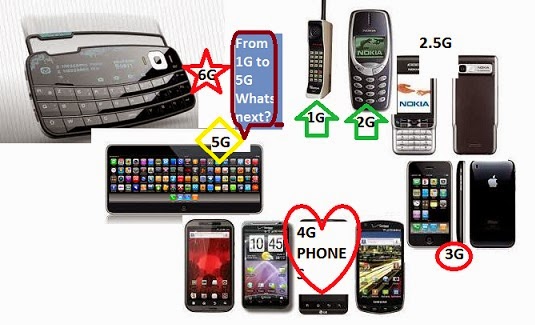
Our society from slave society to feudal society to industrial society and finally to the present information society, every social change, has originated from some kind of productivity change. Tieli cattle farming, steam engine, electricity and so on. And every change in productivity will bring about a change in all aspects of society. That is, to move society into a new shape. Network society is such a form. Just as the invention of the steam engine brought mankind into the age of steam. The emergence of network society is also a social necessity, because of the revolutionary development of information technology. As Custer put it, the evolution of life is a series of steady states, but with a small number of rapid events that define the interval. At the end of the 20th century, with the rise of online society, there was just such a gap: the shift in material culture was driven by new technological paradigms organized around information technology. Here we see information technology. The most outstanding performance of information technology development is network technology and computer. In the 20th century, information technology developed rapidly. In terms of the mobile data we use in our daily life, when I was in primary school 10 years ago, 2G networks were the common data traffic. At that time, one yuan could access 3MB of data per month. This 3MB of data can meet the flow of a month using QQ and other chat communication software. A few years later, information and communication technology developed into what is now 4G networks. Now we almost cannot leave the network, from life to work; Every corner of life is covered by the Internet. Why does the Internet have such magic? This is due to the nature of the network. A network is a set of interconnected nodes where a curve meets its own body. That is, the network has no center, and each node it contains has a different relevance to the network. That is to say, the interconnectedness of the network, and that interconnectedness coincides with the development characteristics of social creatures like us.
As a historical trend, the dominant functions and processes of the information age are increasingly organized in networks. The network has constructed a new social form of our society, and the diffusion of network logic has substantially changed the operation and results in the process of production, experience, power and culture. In other words, the Internet, based on information technology, is reshaping many aspects of society, including economy, politics and culture. Through the contents of the book, we know that the author’s attitude towards the formation of such a society is neutral, or can be said to be positive.
It is true that the quality of our life has been constantly improved. We can work, shop, watch movies and keep up with the events happening in the world at any moment from home thanks to the formation of the Internet society. But we also have to remember that in such a society, our personal lives, our privacy, our freedom are severely restricted. We can even survive by working as hard as 996. We have a connection with the world as a whole, but we should find that we don’t have the freedom to disconnect. I occasionally feel the urge to uninstall Wechat, but I never dare to do so because it has become such a part of my life that it is inextricably linked with the rest of my life.
Reference:
[1] Ford Lumban Gaol & Fonny Dameaty Hutagalung(2017).Social Interactions and Networking in Cyber Society.Springer, Singapore.
[2] Manuel Castells.(2016).A Sociology of Power: My Intellectual Journey. Annual Review of Sociology(), doi:10.1146/annurev-soc-081715-074158.
[3] Jan A.G.M. van Dijk & Kenneth L. Hacker(2018).Internet and Democracy in the Network Society.Taylor and Francis.
[4]Schuler Douglas & Day Peter(2018).Shaping the Network Society:The New Role of Civil Society in Cyberspace.The MIT Press.
 Halo Besty